In Shenzhen, bazaar method hardware development which is finally finding out who the inventor is not understood is done.
The Cathedral and the Bazaar on the Hardware development in Shenzhen
In Shenzhen, bazaar method hardware development which is finally finding out who the inventor is not understood is done.
About the end of the 20th century when I started work, the idea of open
source began to spread a little. Until then, software was paid money,
bought a support contract, or used a secretly dividing illegal.
At that time, free and open were treated in the same meaning, and I was
not concerned about FreeBSD’s “Free” meaning anyhow.
The Cathedral and the Bazaar, at 1999, and now.
Open source development method,
“Developers will make development communities larger by developing and
sharing themselves by themselves, thereby increasing the quality of
software”
I thought that the style of software is attractive, including some
actually open source software, and that the software development
industry I worked on will change dramatically.
What is “copyright or intellectual property right, originally right?”
There are also creative commons and approaches from cyber law, and it is
exciting to work on technology and the Internet.
When the term of open source began to become famous at the end of the
20th century, commentary such as “open source” was listed in the
newspaper.
It will be like AI and FinTech now.
The Cathedral and the Bazaar{.markup–anchor .markup–p-anchor} were released in the middle of 1999. Even if anyone can obtain the source and participate in development, even open source is clear, the reader is clear, releasing it carefully as the person or group overlooks the whole “Cathedral” model, such as Linux We adopted only about, any source is taken in, and everyone can make a branch, often releasing “Bazaar” model.
Currently, the bazaar style has become firmly established.
At that time, “people using it will not know which one is better”, “It
is said that the whole credit is lost”, but if you look at the
comparison page of Wikipedia’s Linux
distribution{.markup–anchor
.markup–p-anchor} now, there are 44 distinct distributions of nature,
and free · Although there is also a difference in fee and specialized
for individual purpose, no big mess has occurred.
Currently it is somewhat cautious to distinguish between open source and
other development methods, and it is mainstream that “programmer’s
programmer software for programmers” becomes open source. Both Apple and
Microsoft have released an open source development environment. On the
contrary, Microsoft is a sponsor of Linux foundation.
Many of the development languages, development environments, server
software, etc. are open source and the larger the development community,
the easier it is to take a bazaar model among them. Those who are happy
(at least the organizer) are more likely to make the outline of the
community clearer than the cathedral model.
And what main users are not programmers, such as office software,
photofinishing software, synthesizer software, etc. are still
proprietary (exclusive), things that have properly developed and have
money keeping high quality. Neither Photoshop, Microsoft Office nor
Windows has gone.
The Cathedral and the Bazaar on the Hardware development
Changes that have occurred in the software world in the late 1990s are
spreading throughout society. The open source model that only a keen
programmer touched on is spreading to the world of contents and the
world of hardware.
Hardware where manufacturing or distribution does not work like
software, prerequisites are too different from software, and it is
difficult to speak with the same premise.
First of all, hardware that must be manufactured one by one is difficult
to create the idea of a repository. Even now, the development of
mass-produced hardware is stronger than firms with firm planning,
resources and cost compared to software. Although it is a startup
company, it is a full time, not a hobbyist.
And if you manufacture it badly, it will not be the original copy.
Still representative open source projects such as
Arduino
and RepRap{.markup–anchor .markup–p-anchor} are
born. Arduino was guaranteeing the condition that “everyone can use and
freely develop and expand” by guaranteeing the “part that distributes
proper copy” (and trademark) by themselves, and RepRap is also many
Birth of a fork. However, both projects are not easy to manufacture and
raise funds to support them.
I think that the thing secured in the hardware by the concept of open
source was to “participate in development without permission (without
prior notice)”. Zaker of Makerbot which was touched in this column is
still active in Shenzhen of China and praising the freedom of Shenzhen
during the interview of Maker
Pro{.markup–anchor
.markup–p-anchor} (Books, MakerMedia).
As Zach says, Shenzhen freedom is open source freedom, and regardless of
thought, it is very similar in reality.

The bazaar style hardware development by GongBang and GongMo
Hardware in the form of 公板GongBan (Public board) ·公模 GongMo (Public
mold) is distributed in Shenzhen where only the manufacturing technology
has accumulated as “factory of the world” before the concept of
intellectual property gets rooted properly.
GongBan stands for public PCB, a bit fashionable product, PCBs already
mounted are aligned in the market, you can buy as many as you want.
GongMo means public mold, which means exterior as well.
For example, by combining GongBan of GPS sensor and GongBan of action
camera and putting it in action camera GongMo, action camera with GPS
function can be put on the market. It is extremely cheap compared with
designing exclusive boards and exteriors, and even 10 or even 100 can be
scalable productized.
Products hit will also create new GongBan and GongMo and the hardware
will evolve so that reproductive organisms will evolve with small
differences and mutations repeatedly. Evolution is truly a truly minor
difference (more often than just copying), there is almost no inventor
’s name left in the change there.
Inventorless invention invented from Shenzhen Bazaar development
Evolution carried out on the public board is merely a minor change that combines what is selling and new products with different looks and contents like Jobs Apple produced are never born. Still, the accumulation of small evolution yields new products.

This is a nice solution to listen to music on Google Music and Youtube,
Bluetooth speakers make it hard to let smart phones do other work while
listening to music and leave them on the charging stand I can not
operate it.
It is not as revolutionary as the iPod, but it is a product of a new
genre.

I think that the motorized unicycle is originated from the United
States, but I see the most in Shenzhen. Remodeling such as turning on
the LED and attaching the Bluetooth speaker is being done. Personal
mobility in this hand creates derivatives such as buggy for children.
Replacing the front wheel of the bicycle with an in-wheel motor, a
product that turns the road bike into an electric motorcycle has also
been born.
The Bazaar method, invention without inventor
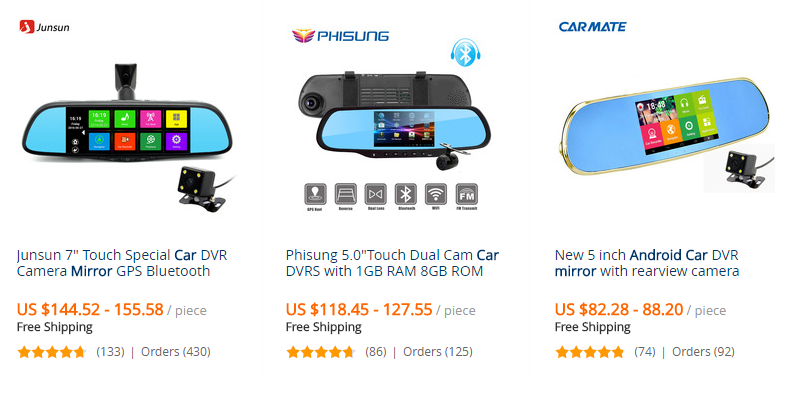
In the rearview monitor charged with a monitor on the rearview mirror of
this car, invented items of the witting artist are accumulated and
evolving is seen.
Originally it began in the form of a rearview mirror as a magic mirror
and incorporating a monitor inside. It’s an ordinary monitor like a TV
display.
Also, in the form of incorporating an Android tablet, it came to be seen
from around last year. In Shenzhen the public board of Android is richly
distributed, and public models of rearview mirrors are also distributed.
When combined, a rearview mirror incorporating an Android tablet is
born. Many are also equipped with drive recorder.
This “rearview mirror with Android” is a quite popular product, I think
that it is used with a probability of more than half when taking a taxi
or a normal car in Shenzhen.
A major map service 高徳地図 (AutoMap) in China prepared a dedicated
interface for its Android rearview mirror.
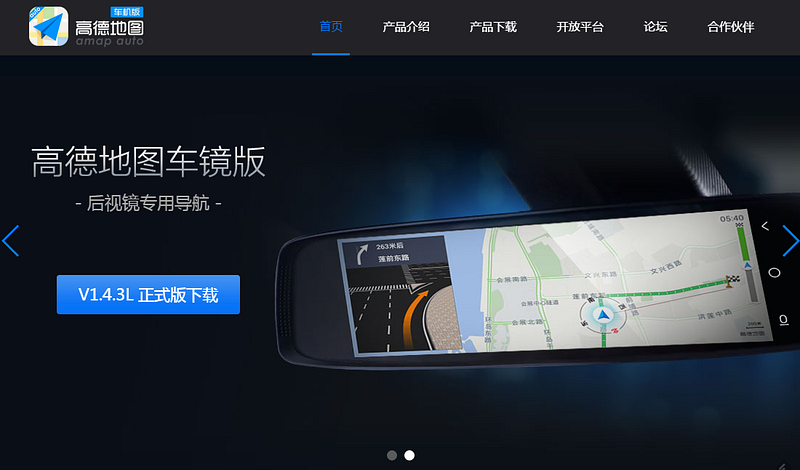
The on-board navigation system in cooperation with Android has been realized with “inventorless invention”. Automap is a service used by many people, real-time data analysis of people who are using traffic jam information, etc. “Because users in this section take time to waste, they will be congested” It is a service that has become popular with high precision combining it with navigation. We realize the function which seems difficult if it is only the manufacturer of the car navigation system, “inventorless hardware” and the application using it.
Each evolution is not so innovative, an easy extension. In addition, most of the products produced by these development processes are of low quality, and it is not yet clear whether there will be innovation that makes the world change completely from that.
Production and distribution of modules such as Public board and Public mold arise from low consciousness of rights concerning intellectual property. I will not know how long it will be secured in China, which is gradually becoming a developed country.
However, for now, the Chinese government seems to emphasize the development dynamism. In search of environments that can develop hardware at high speed, many emerging hardware companies are trying to put development bases in Shenzhen. Since such companies are oriented towards the global, there may be output that is different from the current low-quality development.
In addition, Seeed, a company that supports the world’s open source hardware, is doing business by offering such a chaotic environment of Shenzhen for global makers. The RePhone that they sell is to sell the public sheet which makes up Shenzhen mobile phone as neat open source hardware as far as the data sheet and it can be said to be a business like Redhat on Linux.

Since 17 years since ‘The Cathedral and the Bazaar’, ‘MAKERS’ is
published in 2012, it has been only four years ago.
It seems that the concept based on open source and community is still
creating new events on various layers of society as well as hardware
development.
By TAKASU Masakazu/高須正和{.p-author .h-card} on November 20, 2016.
Canonical link Exported from Medium on February 6, 2026.