From unknown booth to real demand — field notes from Embedded World 2026
I’m currently in Nuremberg, Germany, attending Embedded World.
This is episode 3 of my field notes from the event. This time, I focused on what Maker-oriented companies like M5Stack are actually doing on the ground — and how they are connecting with the embedded industry.
👉 I recorded the actual booth visits and conversations here:https://medium.com/media/793a689d858fcae27890d8a060d6afae/hrefFrom “unknown booth” to real demand: M5Stack’s shiftThis is M5Stack’s third time exhibiting at Embedded World.
In the early days, they exhibited under a “Chinese New Connection” program — essentially a startup entry point into the European market.
At that time, the situation was simple:Nobody knew M5StackEvery conversation started from zeroEven after explaining, people would say “OK” and leaveIt was a tough exhibition.

The turning point: EspressifThings changed after Espressif became a major shareholder.
At Embedded World 2025, the booth structure itself changed:Espressif (chips)M5Stack (applications)This created a clear contrast.
Espressif showed chips. M5Stack showed what you can actually build.
That combination worked.
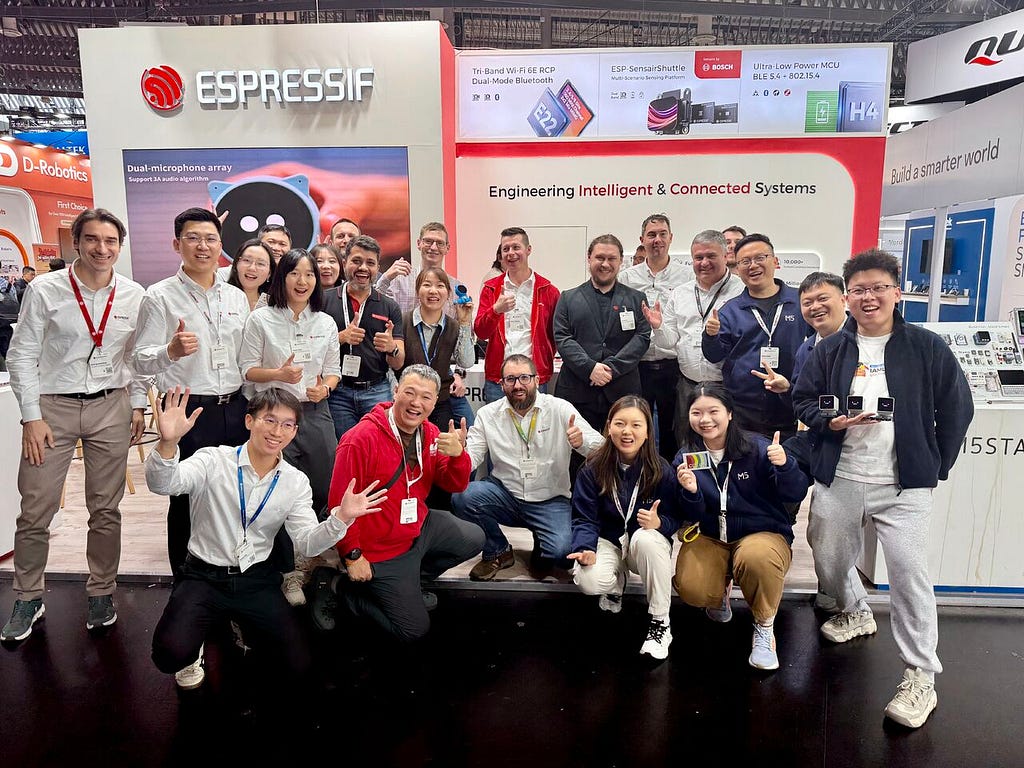
2026: People come with requestsIn 2026, the situation is completely different.There are M5Stack fans in EuropePeople already know the productsVisitors come with specific requirementsFor example:
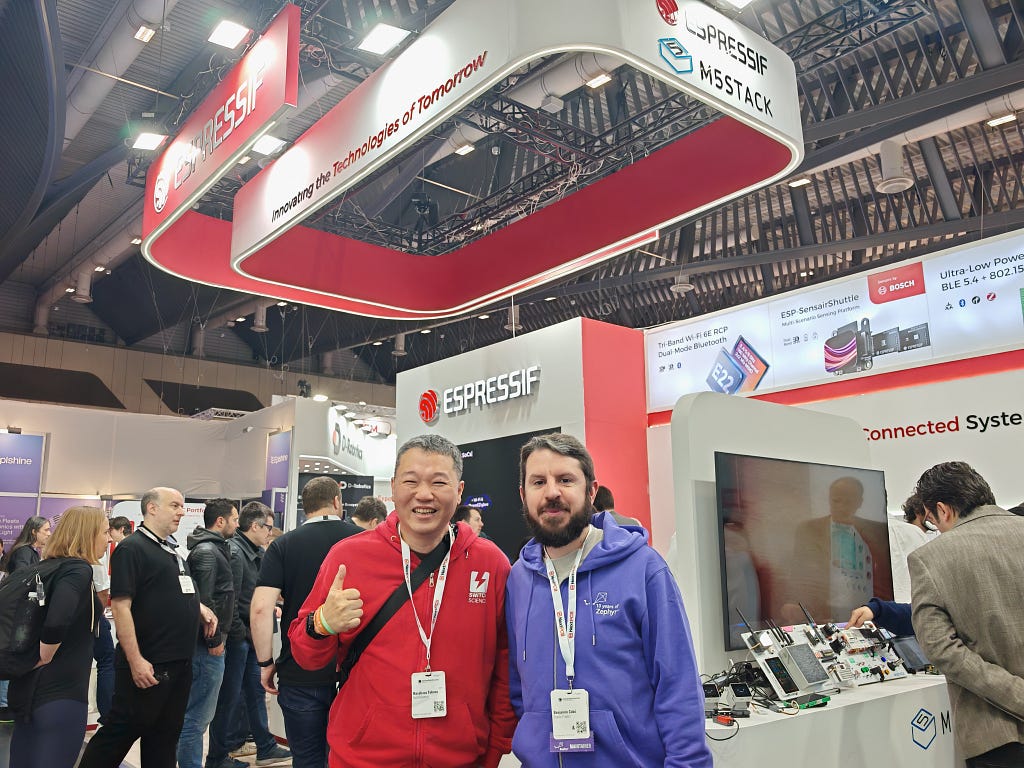
Someone came to the booth asking about Zephyr support.“ESP32 works well with Zephyr, but I want better support for M5-specific features like displays and buttons.”This is a huge shift.
👉 From explaining products 👉 To receiving feature requests
That’s when you know a product has entered the ecosystem.
Open source is not abstract — it creates meetingsAnother important observation:
Open source is not just a concept here — it creates real business opportunities.
For example:
Companies like Ultralytics (YOLO) → They reach out before the event → “Let’s meet at Embedded World”
Leads are generated before you even arrive.
This is very different from traditional exhibitions.Embedded World is about meeting people you already touchedAt the event, I met people connected through:TinyGo communityTwitter interactionsPast events in JapanOne example:
Someone from Hungary was walking around with a self-built robot. He had previously bought a keyboard made at a TinyGo event in Japan.
We connected immediately.
👉 Embedded World is not just:a place to discover new companiesIt is also:a place where online connections become real meetingsWhat M5Stack actually showedAt the booth, M5Stack presented:STACK-CHANLLM-related modulesPLC-oriented modules (for industrial use)There is a clear direction:
👉 Not just Maker tools 👉 But industrial-ready modulesHidden users existAnother interesting point:
Many users are already using M5Stack products — but not publicly.Internal toolsPrototyping systemsIndustrial experimentsThis makes it difficult to capture “visible adoption,” but the actual usage is larger than it appears.Zephyr requests: signal from the ecosystemThe Zephyr-related request mentioned earlier is important.
It shows:M5Stack is already inside the OSS ecosystemDevelopers want deeper integrationThe next step is not hardware — it’s software compatibility👉 This is a signal: Maker hardware is now expected to behave like standard components in an ecosystemReal business happens here: DigiKeyEmbedded World is also a place for concrete business discussions.
For example:Meetings with DigiKey were scheduled before the eventCustom products (like a DigiKey-branded STACK-CHAN) were preparedNegotiations happened on-siteThis is not just exposure.
👉 This is distribution strategy in action

Why this mattersThis episode is not about “Maker entering industry.”
It’s about something more specific:
👉 When a product moves from:unknown → recognizeddemo → requesttool → ecosystem componentThat transition is happening right now.
And Embedded World is one of the places where you can see it clearly.Watch the actual field footageIf you want to see:Booth atmosphereReal demosConversations happening on-site