Disassembling “Made in India” in a Chennai Hotel Room: How Self-Reliant Is India’s Manufacturing Ecosystem?A 110 INR calculator, a cracked screw boss, and a Shenzhen-style PCB — what they reveal about Chennai’s industrial stage.
In a small general store in Chennai, I found a calculator with “MADE IN INDIA” printed boldly on the box.
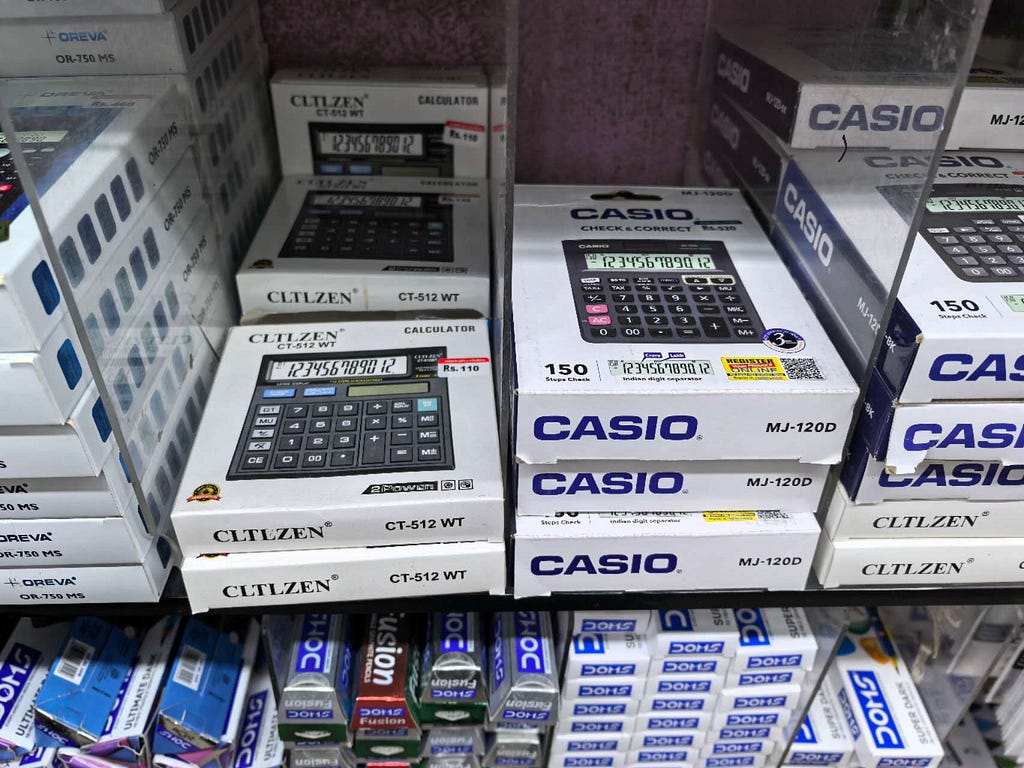
Right next to it was a Japanese CASIO model.
The CASIO cost 520 INR. The Indian one cost 110 INR — roughly one-fifth of the price.
I bought the Indian model.
Not as a consumer. As a teardown subject.Opening It UpI purchased a small precision screwdriver set from another shop and opened the calculator in my hotel room that evening.
The moment I removed the back screw, I heard a dry cracking sound.
The plastic screw boss had fractured immediately — without excessive force. I was being careful.
Looking more closely, the injection molding design seemed under-optimized:Thin screw bossMinimal reinforcement ribsSlightly rough finishingThis suggests either material quality constraints, tooling maturity issues, or simply cost pressure. At 110 INR, every gram of resin matters.
The enclosure felt early-stage in terms of mechanical refinement.

The PCB Looked FamiliarInside was a single PCB:

COB (chip-on-board) epoxy blobDirect LCD flex connectionMinimal component countStrong cost optimizationFrom a cost-engineering perspective, it was rational.
But something stood out.
The PCB silkscreen font and layout style felt strikingly similar to low-cost designs commonly seen in Shenzhen.
Out of curiosity, I took a photo and performed an image search on Taobao.
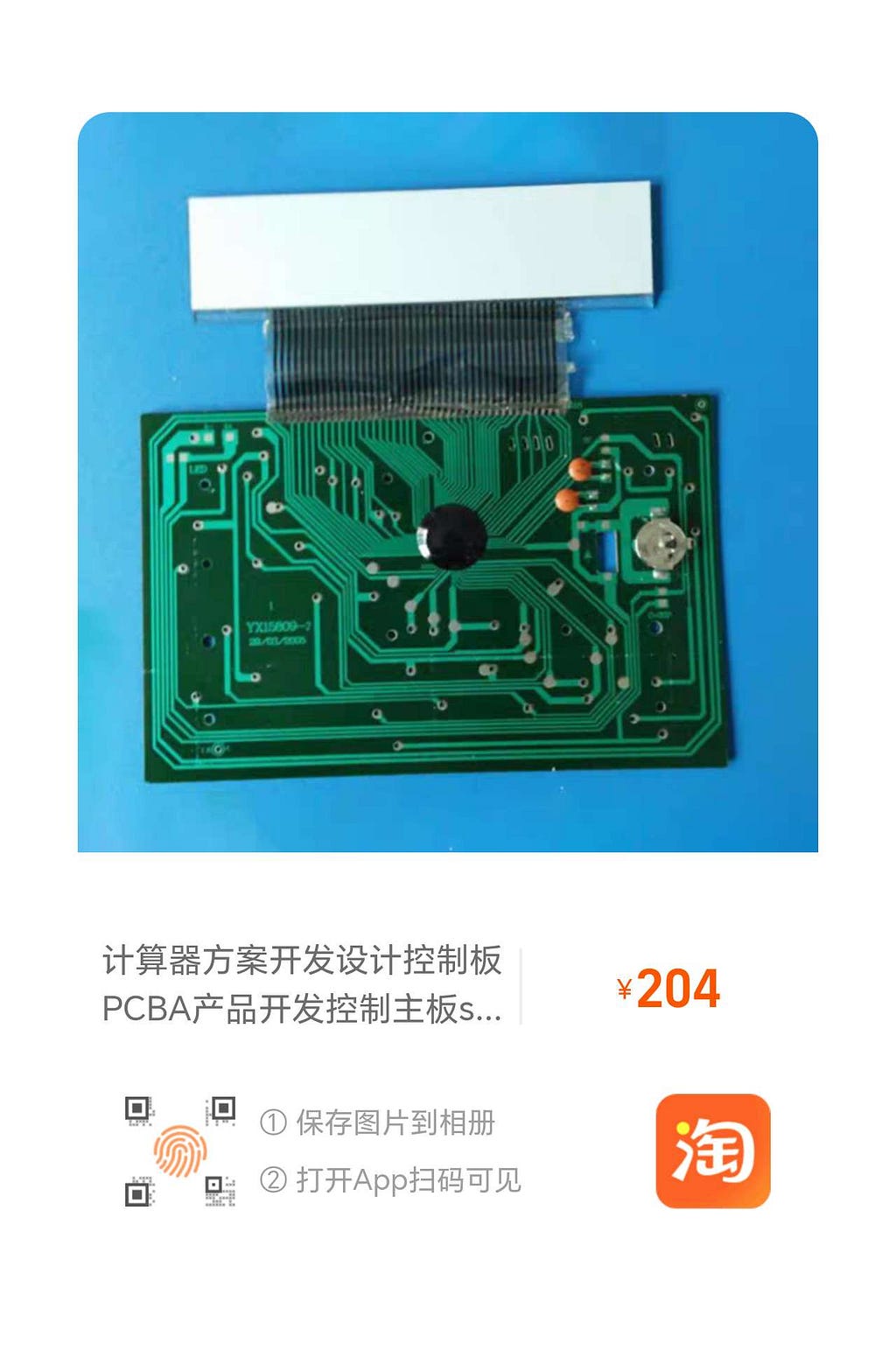
Almost identical calculator reference designs appeared — offered by Shenzhen ODM companies providing turnkey PCB solutions for low-cost electronics.
The resemblance suggests a likely structure:PCB design & manufacturing: China (ODM ecosystem)Final assembly & enclosure molding: IndiaBranding & distribution: IndiaIn other words:
“Made in India” at the product level, but the deeper design ecosystem remains externally anchored.
This is not criticism. It is a stage of development.Chennai: Industrial Expansion in MotionZooming out from the calculator, the city itself tells an important story.
Tamil Nadu is one of India’s strongest manufacturing states, with:Automotive clustersElectronics assemblyHeavy industryPort infrastructureNominal GSDP growth has been reported at around 16%.
Metro construction is visible throughout Chennai. Industrial parks stretch into the suburbs. New vehicles are common. Rail stations are constantly busy.

Higher-priced AC train compartments fill quickly. Cafés are filled with young professionals working on laptops.
This is not a consumption model driven by foreigners.
It is domestic middle-class demand.

A Familiar Pattern — and an Important DifferenceChennai today reminds me, in several structural aspects, of Shenzhen in the late 1990s and early 2000s:Domestic demand strengtheningAssembly capability localizingFinancial friction decreasingDesign ecosystem still externally dependentIn early Shenzhen, many products were:Designed in Taiwan or JapanAssembled in ChinaSold primarily to domestic consumersThat phase preceded deeper localization of tooling, design houses, and eventually semiconductor ecosystems.
However, there is an important difference.
Shenzhen experienced massive and rapid foreign capital inflows that accelerated its transformation into “the world’s factory.”
India appears to be moving more cautiously. The pace and nature of foreign integration are different.
At the same time, India has something Shenzhen did not have in the same way:
A 1.4 billion-person domestic market in the era of digital payments.
UPI and digital infrastructure have significantly reduced transaction friction. Capital circulates more smoothly than before.
Domestic demand itself may become the primary growth engine.So Where Is Chennai in the Cycle?If I use that 110 INR calculator as a signal:Assembly is localizing.Injection molding is improving but still maturing.Design capability for low-cost electronics remains influenced by Shenzhen’s ecosystem.Domestic demand is strong enough to sustain industrial growth.This does not mean Chennai is “the next Shenzhen.” Many cities have been labeled that way.
But some structural preconditions are visible.
The open question is whether India will:Deepen local design capability,Build stronger component ecosystems,Or continue in a long-term China-India complementary manufacturing model.The trajectory is clearly upward.
The path may be different.Next: A Different Model in KeralaChennai represents industrial expansion.
Kerala, which I visited next, represents something else entirely: a philosophy of building production capability itself.
There, the focus is not just on assembling products — but on building the machines that build products.
That will be the subject of my next field note.
#India #Manufacturing #Hardware #EmergingMarkets #IndustrialStrategy #Shenzhen #MadeInIndia